By Bloomington Administrative Assistant GAIL CONLEY
Every birder knows the thrill—that first flash of orange high in the canopy, followed by a rich, whistled song that seems to declare the season officially underway. The Baltimore Oriole isn’t just another spring migrant; for many of us, its arrival feels like a true seasonal milestone.
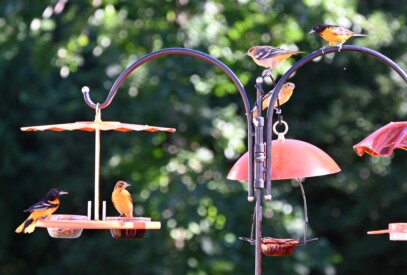
When I first became interested in birding, I admired those who could attract Eastern Bluebirds with just the right habitat. Little did I realize, I already had the perfect setup for Baltimore Orioles. Ideal habitat includes mature shade trees and woodland edges—features common in many established neighborhoods. My first attempt at attracting these beauties was a success, and I’ve been fortunate to see them return to nest year after year. Birds that have successfully nested in an area already know where to find reliable food sources, increasing their odds of raising young successfully.
In the Midwest, oriole species include Baltimore Orioles, Orchard Orioles, and Bullock’s Orioles.
Baltimore Orioles are considered seasonally monogamous and build one of the most remarkable nests in North America. Suspended from the tips of tree branches, their long, hanging pouch nests are intricately woven from plant fibers, grasses, hair, and even string. Construction can take a week or more. Orioles typically raise one brood per season, laying four to five eggs. Both parents help feed the fledglings.
By late summer and early fall, orioles begin their southward migration. Throughout the breeding season—and especially leading up to migration—high-protein foods are important. Mealworms are an excellent supplement and a valuable part of their diet. Our stores stock both live and dried mealworms to help support these energetic birds.
Attracting Orioles
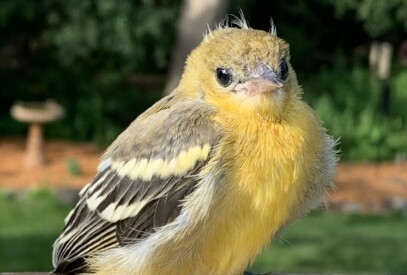
Habitat is key. Consider planting berry-producing shrubs and maintaining mature trees when possible. Avoid pesticides to protect the insect populations orioles depend on. Fresh water is essential, and offering nectar, grape jelly, orange slices, and mealworms at feeding stations can greatly increase your chances of success.
Feeder Recommendations
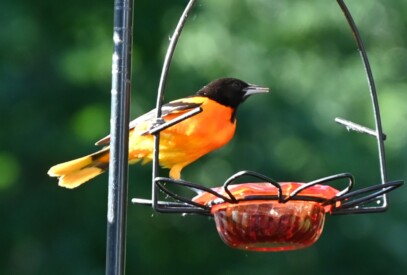
Super Oriole Feeder
Feeds oranges, grape jelly, and mealworms.
Oriole Flower Feeder 🛒 shop online
Feeds oranges, grape jelly, or mealworms.
Oriolefest Nectar Feeder with Bee Guards 🛒 shop online
Feeds oranges and nectar while minimizing bee access.
Why not make this the year you invite a Baltimore Oriole into your backyard? Once you host an oriole, you’ll likely wonder why you didn’t try sooner.