Winter Visitants
Written by CAROL CHENAULT
Minnesota is host to several winter visitants. These are birds we tend only to see here in the winter and can range from regular but rare to common winter visitors. Visits can be erratic and based on food availability and the harshness of the weather farther north.
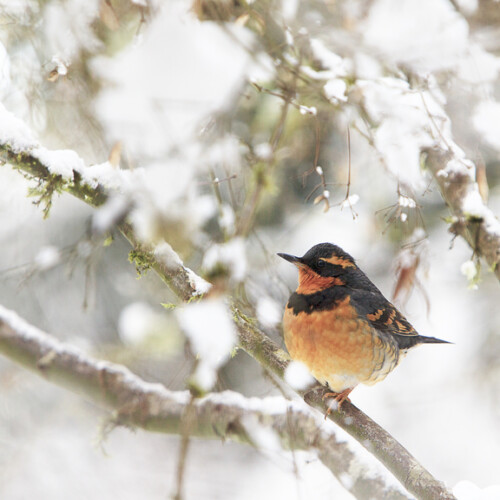
Varied Thrush
When out-of-the-ordinary birds visit during a Minnesota winter, it can cause quite a stir. The Varied Thrush made the paper in 2019 and was mentioned on Facebook in 2025 when it made an appearance. It is a robin-sized bird, and the male sports a blue-gray back with rich burnt orange and sooty black plumage on the underparts. At a quick glance, you may think you are seeing an oriole! The diet of the Varied Thrush switches to fruit and nuts in the winter. They tend to hop on the ground as they forage and favor low shrubs and trees. Considered “a rare but regular” visitor to Minnesota in the winter, some lucky bird watchers have seen them in backyards
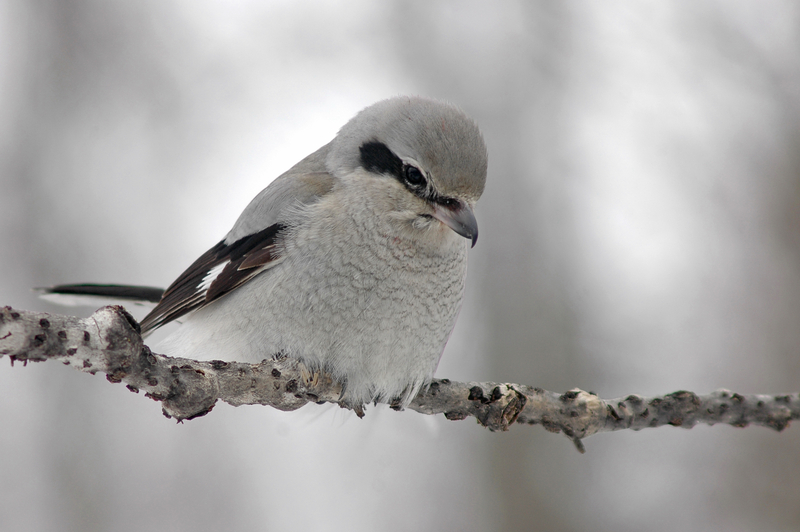
Northern Shrike
Northern Shrikes are known for impaling their prey on thorns, branches, or barbed wire, earning them the name butcher bird. They impale their prey to both immobilize and kill it. They will also wedge prey in the crook of a tree branch. It has been surmised that the birds do this to let the food tenderize or to store it for later in this open-air larder. Impaling and displaying the food serves not only as a territory marker but also as a sign to potential mates of the birds’ hunting prowess. This is not typically a backyard bird, so don’t expect to see them in the suburban landscape. Look for them perched high up and alone atop a tree in scattered scrub in open prairies. They also favor stands of dead trees, again perching atop a dead snag. Areas like Vermillion River Aquatic Management Area near Hastings and the William H. Houlton Conservation Area near Elk River have hosted Northern Shrikes.
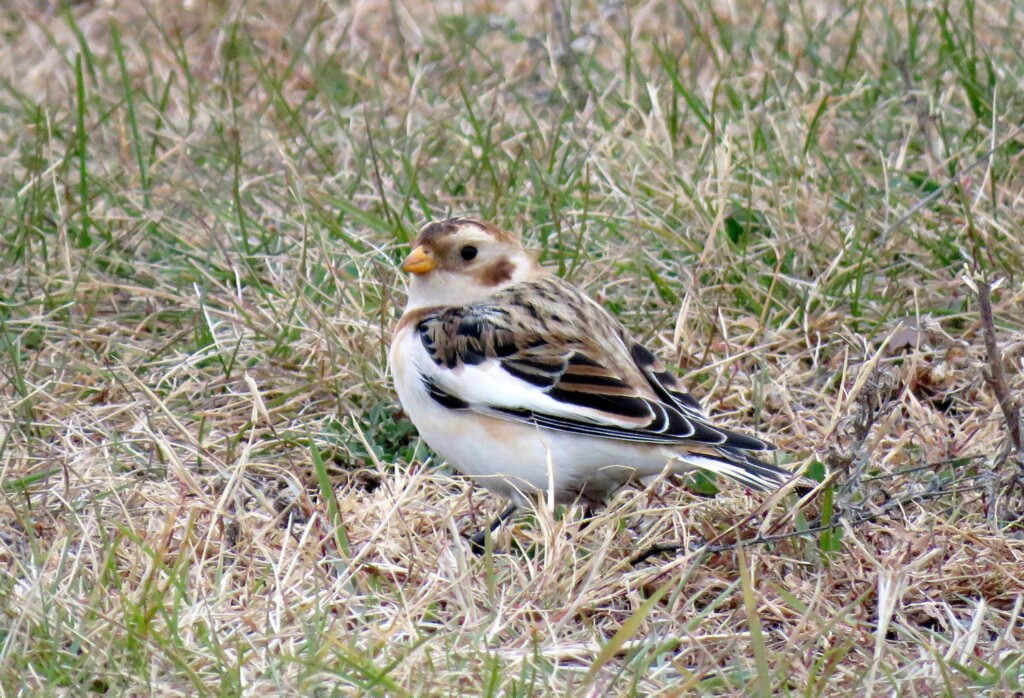
Snow Bunting
Snow Buntings are considered fairly regular winter visitors in Minnesota. They are usually seen in large flocks along country roadsides and in farm fields. A sparrow-sized bird, they are white with patches of beige, featuring black on the wings of the male. They arrive in Minnesota in early October and leave in May for breeding grounds in the tundra. During fall migration (mid-October through November), the North Shore of Lake Superior is a good place to spot Snow Buntings.
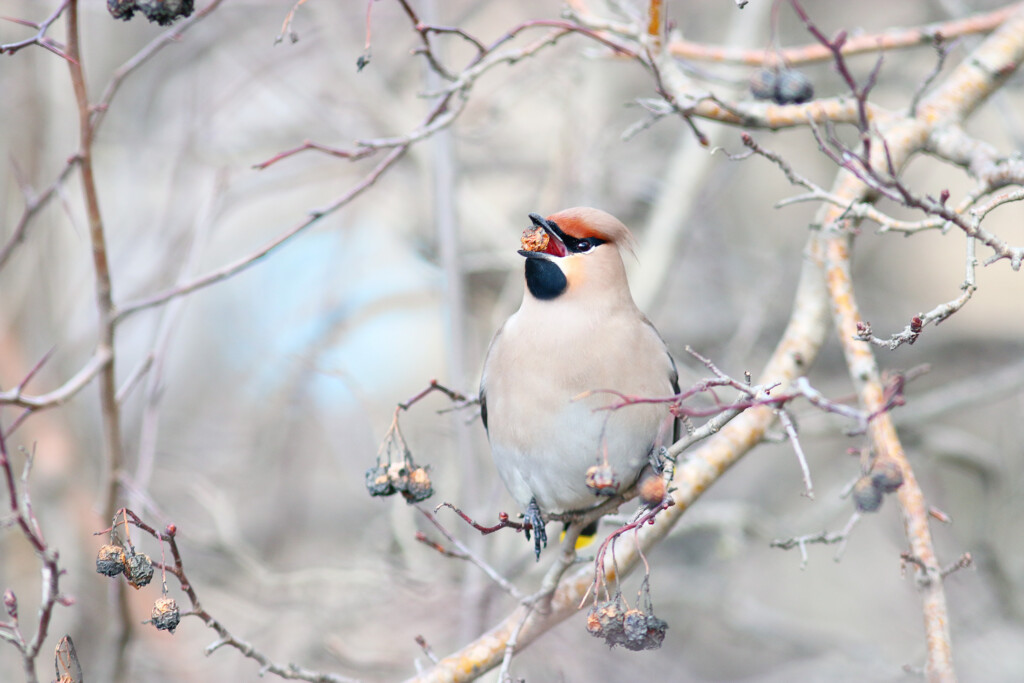
Bohemian Waxwing
The name of the Bohemian Waxwing is a reference to the birds’ wide-ranging territory search for fruit during the winter. This striking bird features a rusty-red undertail that distinguishes it from the Cedar Waxwing. They nest in interior Alaska south to the Rockies. In winter, large flocks range far afield across the northern U.S., including the northern two-thirds of Minnesota. Arriving in December, the population tends to peak in February. Look for Bohemian Waxwings in crabapple, plum, cherry, and mountain ash trees. They prefer fruits that have been softened by freeze-and-thaw cycles. A flock of birds may check the fruit of a tree and leave, returning when the fruit is more palatable. A flock can strip a tree bare of fruit in no time! An interesting note: they have a large liver capable of processing the alcohol that is produced as the fruit ferments due to freezing and thawing.